Boss Nutrition Facts SVG: A Design That Works Hard for You
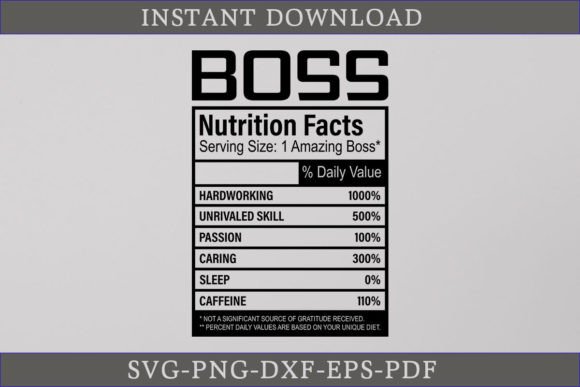
When I first opened the Boss Nutrition Facts SVG Cutting File, I admit I smiled. It’s one of those designs that lands squarely in that sweet spot between clever concept and practical execution. The layout mimics a classic nutrition label, but the "facts" are all about boss energy, confidence, and leadership. As someone who regularly tests digital embroidery files before they ever touch a hoop, my immediate thought was: this has real legs for a range of handmade products. Not just as a novelty, but as a solid piece of graphic design that can elevate a custom apparel project or a small shop product.
The file comes as part of a zip archive containing SVG, DXF, EPS, PNG, and PDF formats. For an embroidery designer or a craft business owner, that coverage is exactly what you need. You can pull the SVG into your digitizing software, use the PNG for printable mockups or product previews on an Etsy listing, and keep the PDF for client proofs. It’s a full toolkit in one download. And after testing several variations on different garment types, I’ve got a clear picture of where this design really shines in real-world embroidery projects.
First Look at the Boss Nutrition Facts SVG: A Design That Means Business
The visual personality of this design is bold, straightforward, and slightly cheeky. The typography is clean and readable – not overly decorative, which is a huge plus for embroidery digitizing. The layout is made up of distinct sections: the "Boss Nutrition Facts" header, a series of "amount per serving" lines, and a footer that reinforces the theme. The overall shape is a neat rectangle with rounded corners, making it behave predictably when hooped. This is a design that doesn’t try to be cute; it’s confident in what it is. That makes it ideal for products aimed at professionals, managers, small business owners, or anyone who wants to wear their ambition on a sweatshirt or tote bag.
Because the design is built as a single graphic element rather than scattered text, it reads well at a moderate size. The theme works beautifully for Boss Day gifts, but I also see it landing well as a motivational piece for entrepreneurs, as part of a "girl boss" collection, or even as a humorous gift for a team leader. The clean lines suggest that the person who created this file had both apparel and accessory applications in mind.
Real Embroidery Performance: What Works and What Needs Attention
I loaded the SVG into my digitizing software and prepared a test on a mid-weight cotton sweatshirt. The Boss Nutrition Facts SVG Cutting File converted cleanly, but as with any text-heavy design, stitch density matters. The small lettering along the "amount per serving" lines can become a problem if you reduce the overall size too aggressively. I recommend testing it at a minimum height of around 4 inches for the whole design. Any smaller, and the finer details risk turning into a blob of stitches, especially on textured fabrics like fleece or terry.
That said, on a stable fabric with proper stabilizer, the design looks crisp. The fill stitches in the larger header area provide solid coverage, and the satin stitches (if you choose to use them) for the main text create a raised, premium feel. I tested it on a medium-weight cotton tote bag as well, and the result was excellent – the design sat flat, the edges were sharp, and it survived a gentle wash without distortion. For commercial embroidery projects, this file is a strong candidate as long as you respect its limits.
I did notice that the design includes some very narrow spaces between characters. If your digitizing software automatically applies small satin stitches, double-check that the pull compensation is correct. I had to manually adjust a couple of gaps in the lettering to avoid thread breaks. This isn’t a flaw in the file itself – it’s typical for any design that mimics a printed label. But it’s a step worth taking before you sew it on a customer’s garment.
Great for:
- Custom apparel: Sweatshirts, t-shirts, hoodies, and vests. The rectangle shape sits nicely on the front chest or upper back.
- Tote bags and aprons: The design fills a tote bag panel perfectly. For aprons, it works well on the front pocket area or centered on the bib.
- Embroidered patches: This is an excellent candidate for a sew-on or iron-on patch. The clean outer shape makes trimming easy.
- Holiday and Boss Day gifts: Personalize it with a name in the footer area (if you digitize that separately) for a thoughtful, custom gift.
- Small shop merchandise: Use it for boutique branding or as part of a "motivational" collection in your Etsy shop.
Use with caution on:
- Small hoop sizes: Below a 4x4 hoop, the text becomes illegible. Stick with larger hoops (5x7 or bigger) for clarity.
- Stretchy fabrics like ribbed knits: The fine lettering can distort if the fabric isn’t stabilized well. Use a cut-away stabilizer and a medium-weight tear-away on top.
- Curved surfaces like caps: The rectangular shape doesn’t naturally follow a cap curve. If you attempt it, reduce the height and center it carefully.
- Very dark fabrics: The design relies on good contrast. Test a white thread on black fabric first – the open spaces in the "nutrition facts" layout can make it tricky to read from a distance.
- Baby clothes: Too large and text-heavy for most infant sizes. Better suited for adult or teen apparel.
Designer’s Checklist Before You Stitch
Before you commit this design to a production run, here are the practical steps I take after reviewing hundreds of embroidery files similar to this one:
- Test on scrap fabric first. Always. I can’t stress this enough. Run a sample on the exact fabric type you plan to use. Pay attention to thread tension and letter readability.
- Check thread color contrast. The design works best with a single thread color on a contrasting background. Light thread on dark fabric or dark thread on light fabric. Avoid tone-on-tone if there’s any risk of the small text blending in.
- Review stitch density. If your software reports a high density in the small text areas, consider reducing it slightly to avoid a stiff, puckered finish.
- Confirm hoop size. The design is meant for a medium to large hoop. If you only have a 4x4, either enlarge the design and accept some cropping, or choose a different file.
- Test in black and white first. Print a paper mockup and hold it against your garment. This helps you visualize placement before you digitize a single stitch.
- Inspect small details. Look for narrow gaps, tiny serifs, or thin lines. These are the first places where thread breakage occurs.
- Use proper stabilizer. For this design, a medium-weight cut-away stabilizer is my standard. For stretchy fabrics, add a second layer or use a spray adhesive to keep the fabric from shifting.
- Check licensing. The product description says you get SVG, DXF, EPS, PNG, and PDF files. It does not specify license terms for commercial use or digital resale. Before you sell finished products or include this in a digital bundle, verify the seller’s license. Many cutting file shops allow commercial use of physical items but restrict digital redistribution.
How This Design Builds Product Value and Customer Trust
In my experience running a small embroidery business, customers respond well to designs that feel intentional. The Boss Nutrition Facts SVG Cutting File has that quality. It looks like a piece of branded merchandise from a company that knows its audience. When you stitch it on a sweatshirt or tote bag, the finished product feels giftable, professional, and shareable. I can easily see this becoming a top seller for Etsy sellers who create "Boss Day" or "motivational" collections.
For craft fair products, the design stands out because it’s different from the usual monograms or flower motifs. It’s a conversation starter. People will lean in to read the "nutrition facts," and that engagement often leads to a sale. It also photographs well for printable mockups, which is a huge advantage for digital product sellers who need clean, readable previews.
One thing I appreciate is that the design doesn’t rely on trendy slang or niche jokes that will feel dated next year. The "Boss Nutrition Facts" concept is broad enough to work for years. That makes it a smart addition to any commercial embroidery catalogue or handmade product lineup.
Final Thoughts for the Craft Business Owner
If you’re considering adding a design like this to your product line, I’d say go for it – but with the understanding that it requires careful digitizing and fabric selection to look its best. It’s not a "hoop and go" design for absolute beginners. But for anyone who has experience adjusting stitch density and stabilizing fabric, the final result is worth the extra effort.
The file formats provided (SVG, DXF, EPS, PNG, PDF) give you flexibility whether you’re using a commercial embroidery machine, a home cutter for appliqué, or just creating digital mockups. Just remember: unpack the zip archive first. The files are packed, and you need to extract them before use. I recommend keeping all formats in the same folder so you can batch-rename them for your shop if needed.
Boss Nutrition Facts SVG Cutting File is a solid, reliable design that fits naturally into the Crafts and Graphics categories. It’s clever without being gimmicky, readable without being boring, and versatile enough to work on apparel, accessories, and home decor. If you treat it with the same care you’d give any text-heavy embroidery project, it will reward you with a finished product that customers remember – and that’s exactly what you want for your craft business.