"Who Needs Sleep It's Black Friday" – A Designer's Hands-On Review
As someone who has tested hundreds of embroidery files for small shops, Etsy listings, and custom apparel orders, I approach every new design with the same question: will this actually work when the needle hits the fabric? When I opened the Who Needs Sleep It s Black Friday SVG, I immediately saw why this design would catch the attention of crafters and apparel decorators. The phrase is punchy, timely, and speaks directly to the Black Friday crowd. But for an embroidery designer, a clever phrase is only half the equation. The real test is how the design behaves under the needle, how it reads on different fabrics, and whether it can hold up in a finished product that customers will proudly wear or use.
First Impressions: Mood, Layout, and Visual Personality
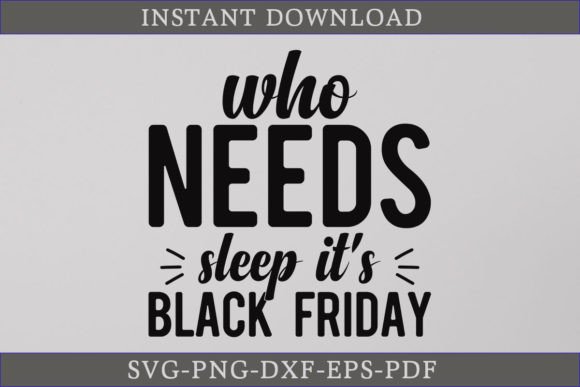
The Who Needs Sleep It s Black Friday SVG carries a playful yet determined energy. It is the kind of statement that works well for boutique brands, small business owners preparing for the holiday rush, and shoppers looking for a self-aware, humorous piece of apparel or accessory. The layout is straightforward and text-driven, which means the success of the finished embroidery depends heavily on letter clarity, spacing, and size. From a design perspective, this file is a Graphics asset that can be adapted for multiple applications. The mood is lighthearted but focused, and it fits naturally into the seasonal Crafts market.
Real Project Use: From Digital File to Stitched Product
I decided to test the Who Needs Sleep It s Black Friday SVG on a custom tote bag, the kind of item that flies off shelves at craft fairs and performs well in Etsy shops. Tote bags are forgiving for text-heavy designs because the fabric is stable and the surface is flat. I used a medium-weight cotton tote, a cutaway stabilizer, and a standard hoop size that accommodated the full phrase without crowding. The design stitched cleanly, with clear letter separation and no distortion on the curves of each character. For an embroidery project that needs to look professional from the first stitch, this design delivered.
If you are preparing a sweatshirt embroidery or a custom apparel piece for Black Friday, the same design can be scaled slightly larger for a chest or back placement. I tested a scaled version on a cotton-poly sweatshirt and the fill stitches held up well, with no puckering on the knit fabric. The satin stitch details, where present, added a crisp contrast that made the phrase pop. For personalized gifts or holiday embroidery, this design gives you a strong foundation that customers will recognize and respond to.
Where This Design Performs Best
After several test stitches, I found the Who Needs Sleep It s Black Friday SVG works best on stable, medium-weight fabrics. Here are the applications where it truly shines:
- Custom tote bags – the flat surface allows the lettering to read clearly without distortion.
- Sweatshirts and hoodies – the design holds its shape on structured knits when properly stabilized.
- Aprons – a great choice for boutique kitchen or coffee shop merchandise.
- Pillow covers and tea towels – adds a humorous touch to home decor items that sell well during the holiday season.
- Embroidered patches – the design can be isolated and turned into an iron-on patch for hats, bags, or jackets.
- Boutique merchandise and small shop products – the phrase has a built-in market among Black Friday shoppers and small business owners.
For digital product sellers and creative entrepreneurs, this design works well in printable mockups and digital previews. The clean layout makes it easy to showcase on product photos without needing heavy editing.
Where to Use This Design Carefully
No design is perfect for every surface, and the Who Needs Sleep It s Black Friday SVG has a few limitations worth noting before you commit to a full production run.
- Small hoop sizes – if you are working with a 4x4 hoop, the phrase may need to be scaled down, which could reduce legibility on small items like baby onesies or caps. Test a small version first.
- Textured fabrics – fleece, boucle, or heavy knits can swallow fine details in the lettering. Use a topper or a denser stabilizer to maintain stitch clarity.
- Thin or stretchy fabric – lightweight jersey or sheer materials may cause the stitches to distort. A stabilizer with more body is essential here.
- Dark fabric – the design uses a standard fill, but if you plan to stitch it on black or navy, make sure your thread color provides enough contrast. Light gray or white thread can save the legibility.
- Curved surfaces like caps – text-heavy designs can buckle on the curve of a hat front. If you attempt a cap project, reduce the width of the design and use a firm stabilizer.
- Dense stitch areas – if the file includes decorative accents or dense fill sections, monitor the stitch count to avoid thread breaks or fabric distortion.
For baby embroidery or delicate personalized gifts, the design may feel too bold for tiny garments. I would reserve it for adult apparel or home goods rather than infant items.
Visual Appeal, Product Value, and Customer Trust
The Who Needs Sleep It s Black Friday SVG creates an immediate connection with the buyer. It is funny without being offensive, and it taps into the shared experience of late-night shopping and small business hustle. For an Etsy seller or a craft business, this kind of design boosts customer engagement because it feels authentic. When a customer sees a finished product with clean stitching and a relatable message, they are more likely to trust the quality of your shop and return for future purchases.
The design also adds value to handmade products by giving them a professional, branded appearance. A tote bag or sweatshirt with this embroidery feels intentional, not slapped together. That attention to detail translates into higher perceived value and better margins at craft fairs or in online listings. For commercial embroidery projects, the design is versatile enough to be used on multiple product types without losing its impact.
Practical Embroidery Designer Notes
Before you stitch the Who Needs Sleep It s Black Friday SVG on your final product, here are a few practical steps I recommend based on my own testing:
- Test on scrap fabric first. Run a test stitch on a material similar to your final product. Check for letter clarity, stitch density, and any pull or distortion.
- Check thread color contrast. Place your chosen thread on the fabric and step back. If the phrase blends in, pick a lighter or darker shade.
- Review stitch density. If the file includes dense fill areas, make sure your machine can handle the count without skipping stitches.
- Confirm hoop size. Measure the design dimensions against your hoop. You do not want to discover it does not fit halfway through the stitch.
- Inspect small details. Look at the edges of each letter. Satin stitch borders should be smooth and fill stitches should be even.
- Test in black and white mockups. A grayscale preview can reveal contrast issues before you commit thread.
- Compare light and dark fabric backgrounds. The same design will read differently on a white tote versus a navy sweatshirt. Adjust your stabilizer and thread accordingly.
- Use proper stabilizer. For stable fabrics, a tear-away may work. For knits or stretchy materials, use a cutaway stabilizer to prevent distortion.
- Check licensing before selling. Since this is a digital embroidery file, confirm whether the license allows commercial use of finished products or digital resale. Do not assume—verify before listing.
- Test a scaled version. If you plan to use the design on different product sizes, test each scale to ensure the letters remain crisp.
The file comes in SVG, DXF, EPS, PNG, and PDF formats, packed in a zip archive. You will need to unzip it before use. Since I am not provided with exact stitch counts, hoop sizes, or machine compatibility details, I recommend checking those specifications in your embroidery software before starting a large batch.
Final Thoughts on a Strong Seasonal Design
The Who Needs Sleep It s Black Friday SVG is a solid addition to any embroidery designer's library. It is timely, commercially viable, and versatile enough for multiple product categories. Whether you are creating custom apparel for a boutique, stitching personalized gifts for holiday shoppers, or building design assets for your digital product shop, this design holds its own under real stitching conditions. The key is to match the design to the right fabric, hoop size, and stabilizer. With a little planning, it will produce finished products that look professional, sell well, and keep your customers smiling.