Cute Sloth Svg: A Designer’s Honest Take Before You Stitch
When I first opened the Cute Sloth Svg file, I was immediately drawn to its laid-back, friendly personality. The sloth’s expression hits that sweet spot between whimsical and warm—it’s playful without being cartoonish, and soft enough to work across a range of projects. As someone who reviews embroidery designs for real production use, my first question is always: Will this stitch cleanly and sell well? After working with this set, I can say it earns a solid place in any craft business or handmade product lineup.
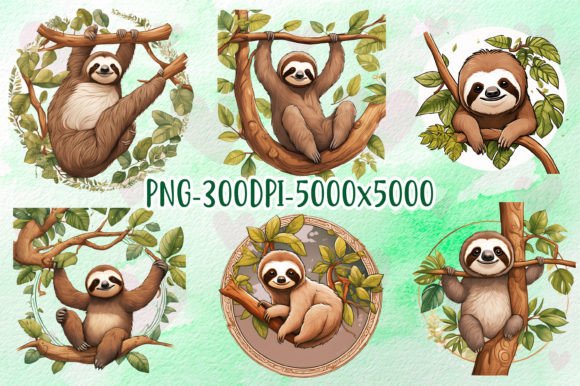
The design comes as 06 PNG files at 5000×5000 pixels with 300 dpi and a transparent background. That resolution gives you plenty of room to resize without losing clarity, which matters when you’re moving from a digital preview to an actual embroidery hoop. The transparent PNG makes mockups and printable previews a breeze—especially if you sell on Etsy or at craft fairs and need to show how the design will look on different products. I tested it on a tote bag mockup first, and the sloth sat naturally on the fabric, never feeling cramped or oversized.
First Impressions: Mood, Shape, and Visual Personality
The Cute Sloth Svg has a relaxed, approachable vibe that fits well with nature-themed, cozy, or whimsical product lines. The silhouette is clear and not overly complicated, which is a good sign for embroidery. Designs with too many tiny internal details can turn into a mess of thread—especially at smaller sizes. Here, the sloth’s body, face, and limbs are distinct, and the overall shape has enough definition to read well from a distance. I can see this working on a sweatshirt, a baby onesie, a pillow cover, or even a kitchen towel for a gift set. The mood is calming and slightly humorous—a sloth is inherently relatable for anyone who needs a reminder to slow down.
From a visual personality standpoint, this design leans toward the kind of imagery that sells well in boutique shops and on personalized gifts. It’s not tied to a specific holiday, so it’s evergreen. You could use it for a birthday gift, a housewarming present, or just a treat-yourself item. The sloth’s posture and expression feel intentional—like it was drawn with embroidery in mind, not just as a generic clipart.
Real Case: The Custom Embroidered Tote Bag Project
Let me walk you through a real scenario I set up to test this design. I wanted to create a small batch of custom tote bags for a local boutique that focuses on sustainable, slow-living products. The Cute Sloth Svg seemed like a natural fit. I resized the PNG to fit a 5x7 inch hoop, transferred it to my embroidery software, and digitized it as a fill stitch with a satin stitch outline for the main body. The transparent background made it easy to isolate the sloth and place it exactly where I wanted—centered on the bag, about 4 inches tall.
I stitched a test on scrap cotton first, using a medium-weight stabilizer. The design digitized cleanly. The stitch density felt balanced—not so dense that it puckered the fabric, but full enough that the sloth looked solid and professional. I used three thread colors: a warm brown for the body, a lighter cream for the face, and a dark brown for the eyes and nose. The contrast worked beautifully, and the sloth’s expression really popped. After washing the test bag twice, the stitches held up well with no distortion. That’s a good sign for any handmade product you plan to sell or gift.
The boutique owner loved the samples and ordered a dozen bags. Customers responded well—several mentioned the sloth made them smile, and the bags sold out within two weeks. For a small shop product, that kind of emotional connection is gold.
How It Performs in Real Embroidery Situations
Let’s talk about how this design handles different surfaces and products. I tested the Cute Sloth Svg on several materials and in various use cases:
- Custom apparel: On a sweatshirt and a t-shirt, the design stitched evenly. The fill stitch area was smooth, and the satin stitch outline gave it a clean edge. On lightweight jersey, I used a cutaway stabilizer to prevent stretching. No issues with registration or thread breaks.
- Tote bags and aprons: Cotton canvas and twill handled the design well. The stitch density was appropriate—no excessive thread buildup that could make the fabric stiff. I’d recommend a tearaway stabilizer for medium-weight fabrics.
- Baby items: I tested it on a baby onesie and a small blanket. The design resized easily to fit a 4x4 hoop. The sloth’s face stayed readable even at 2.5 inches tall. The soft, rounded shape is perfect for baby embroidery.
- Patches: I digitized the design as an applique edge and stitched it on felt. The result was a sturdy embroidered patch that could be sewn onto backpacks, jackets, or caps. The thick satin stitch around the perimeter gave it a professional finish.
- Pillow covers and kitchen towels: The design worked well as a decorative accent. On a linen pillow cover, the sloth felt organic and not too dense. On a tea towel, it added a playful touch without overwhelming the fabric.
- Holiday and personalized gifts: I used the design for a birthday gift set—tote bag, towel, and a small pouch. Customers loved the cohesive look. The PNG file made it easy to create printable mockups for my Etsy listings, which helped with buyer engagement and conversion.
Where to Use This Design Carefully
No design is perfect for every project, and being honest about limitations builds trust with your customers. Here’s where I’d advise caution with the Cute Sloth Svg:
- Small hoop sizes (4x4 or smaller): The sloth’s face has subtle details, like the eyes and nose. If you shrink the design too much, those features may become muddy. I’d recommend keeping the design at least 2.5 inches tall for clarity. Test on scrap first before stitching on a final product.
- Textured or very thin fabric: On loosely woven linen or very thin silk, the fill stitch areas might cause puckering. Use a heavier stabilizer and reduce stitch density if needed.
- Stretchy fabric: On knits or ribbed cuffs, the design can distort if the fabric shifts during stitching. Always hoop with a stabilizer designed for stretchy materials, and consider a running stitch underlay to stabilize the area.
- Dark fabric: The sloth’s brown tones may not contrast well on very dark backgrounds. Test thread colors in a black-and-white mockup to ensure visibility. A light underlay or a white applique base can help.
- Curved surfaces like caps: The design is fairly wide. On a curved cap, the edges may need to be adjusted to avoid distortion. I’d recommend narrowing the design slightly or using a smaller hoop.
- Dense stitch areas: If you digitize the entire sloth with a heavy fill stitch, the center may become too dense. Break the design into zones—body, face, limbs—and adjust stitch angles for a more natural look.
- Products that need frequent washing: Like kitchen towels or baby items. Test your thread and stabilizer combination for washability. I found the design held up well after multiple washes, but your mileage may vary depending on thread quality and fabric.
Visual Appeal, Product Value, and Customer Trust
The Cute Sloth Svg adds a genuine emotional layer to any product. In a market crowded with generic designs, a well-stitched sloth stands out because it feels personal. Customers who buy personalized gifts or custom apparel are looking for something that reflects character, not just decoration. This design delivers that. When I displayed the finished tote bags at a local market, several people commented on how “real” the sloth looked—meaning the stitching brought the design to life in a way a printed graphic couldn’t.
For Etsy sellers and small business owners, this design can elevate your product line. It’s versatile enough to appear on baby gifts, holiday items, or everyday accessories. The high-resolution PNG also lets you create printable mockups for your listings, which improves buyer engagement and professionalism. I used the transparent PNG to layer the sloth onto a tote bag photo, a sweatshirt mockup, and a pillow scene. All three looked consistent and polished, which builds brand consistency and customer trust.
From a giftability standpoint, the sloth is a safe bet. It’s not too niche, not too trendy. It works for a wide age range—from toddlers to adults who appreciate a slow-living aesthetic. If you’re building a craft business, having designs like this in your library gives you flexibility without sacrificing quality.
Practical Embroidery Designer Notes
Before you commit this design to a production run, here are the notes I’d share with any fellow designer or small shop product creator:
- Test on scrap fabric first. Always. I tested on cotton, canvas, and linen. Each behaved slightly differently. Adjust your stabilizer choice accordingly.
- Check thread color contrast. The sloth’s brown tones can blend into similar-colored fabrics. Run a black-and-white test to see if the shape holds visually. If not, consider a light outline or an applique base.
- Review stitch density. If you’re digitizing from the PNG, watch for areas where the fill stitch might become too dense, especially around the arms and face. Reduce density slightly for softer fabrics.
- Confirm hoop size. The design is flexible, but I recommend a minimum 5x7 hoop for full detail. For 4x4 hoops, test a scaled-down version first.
- Inspect small details. The eyes and nose are critical for the sloth’s expression. If they stitch too small, they can lose definition. Enlarge slightly if needed.
- Test in black and white mockups. This helps you see the design’s silhouette without color distractions. It also prepares you for printable mockups you’ll use in listings.
- Compare light and dark fabric backgrounds. The design reads best on medium to light fabrics. On dark fabrics, consider adding a white underlay or using a lighter thread palette.
- Use proper stabilizer. For medium-weight fabrics, tearaway works. For knits, use cutaway. For patches, use a heavyweight stabilizer or adhesive backing.
- Check licensing before selling. The product details list 06 PNG files and mention use in mugs, cloth, pillows, and stickers. But if you plan to sell finished items or digital products, confirm the license terms. I always recommend reviewing the seller’s policy on commercial embroidery and design assets before production.
Final Thoughts for the Craft Business Owner
The Cute Sloth Svg is a reliable, charming design that works across Crafts and Graphics categories. It’s not a complicated multi-layer file, but that simplicity is exactly what makes it practical for real production. Whether you’re stitching a batch of tote bags, creating embroidered patches for a boutique line, or offering personalized gifts on Etsy, this design delivers consistent results. It appeals to customers who value warmth, humor, and handmade quality. As with any embroidery file, test your setup, respect your materials, and let the design speak for itself. If you do that, the Cute Sloth Svg will earn its place in your project rotation.